
Porous Polyethylene Microtia Ear Implants
SU-POR® Porous Polyethylene Microtia Implants are designed to support microtia reconstruction procedures involving surgeon shaped frameworks, individualized contour restoration, and reconstructive planning for pediatric and adult patients.
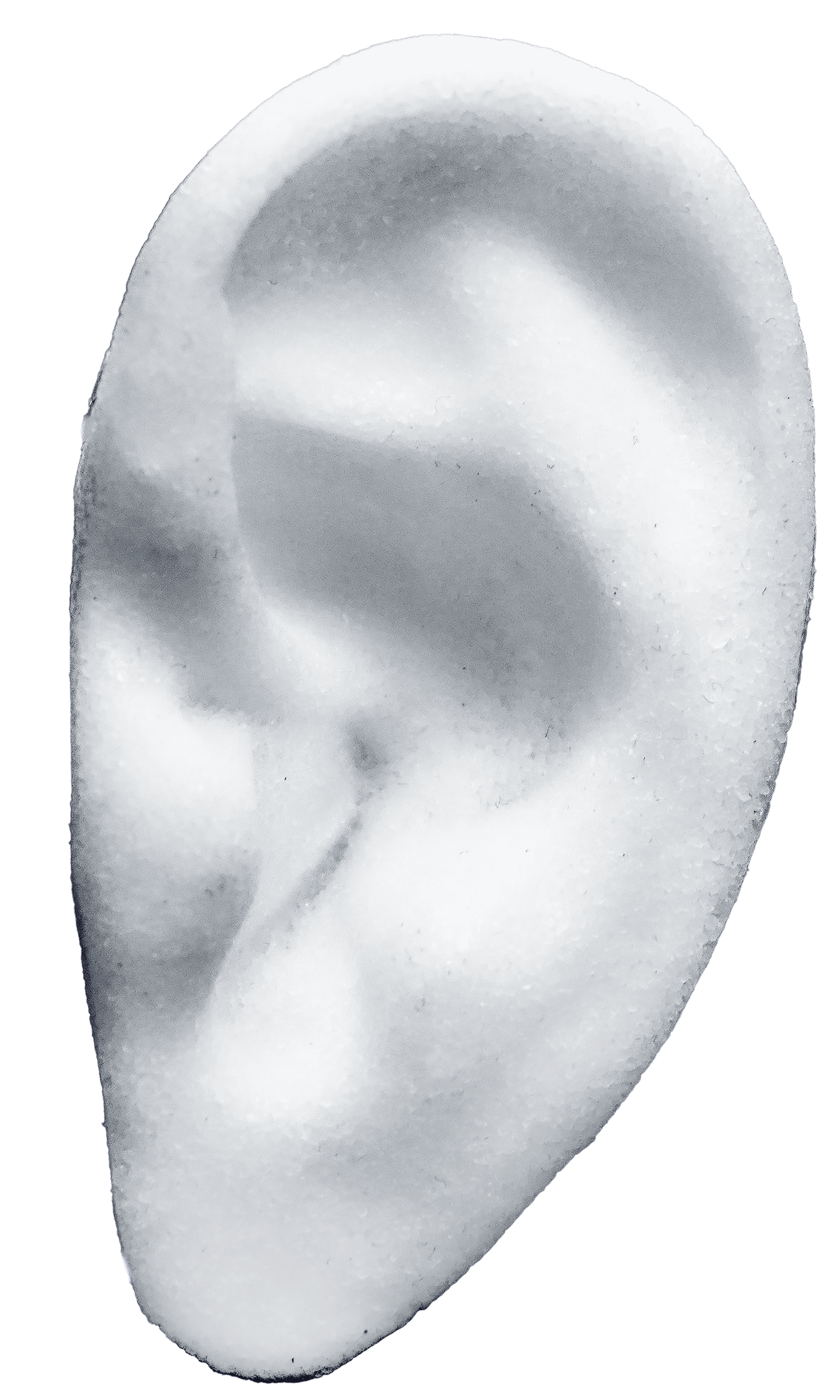
Microtia Reconstruction with Porous Polyethylene
Why Surgeons Use Porous Polyethylene Ear Frameworks
Porous polyethylene materials are commonly used in auricular reconstruction because of their:
– contour adaptability
– fibrovascular ingrowth support
– lightweight structural support
– reconstructive flexibility
– biocompatibility
The interconnected porous structure supports tissue integration following implantation while allowing surgeons to shape and contour frameworks during reconstruction procedures.
Porous polyethylene ear frameworks may assist surgeons in supporting individualized auricular contour restoration while accommodating patient-specific anatomical considerations.
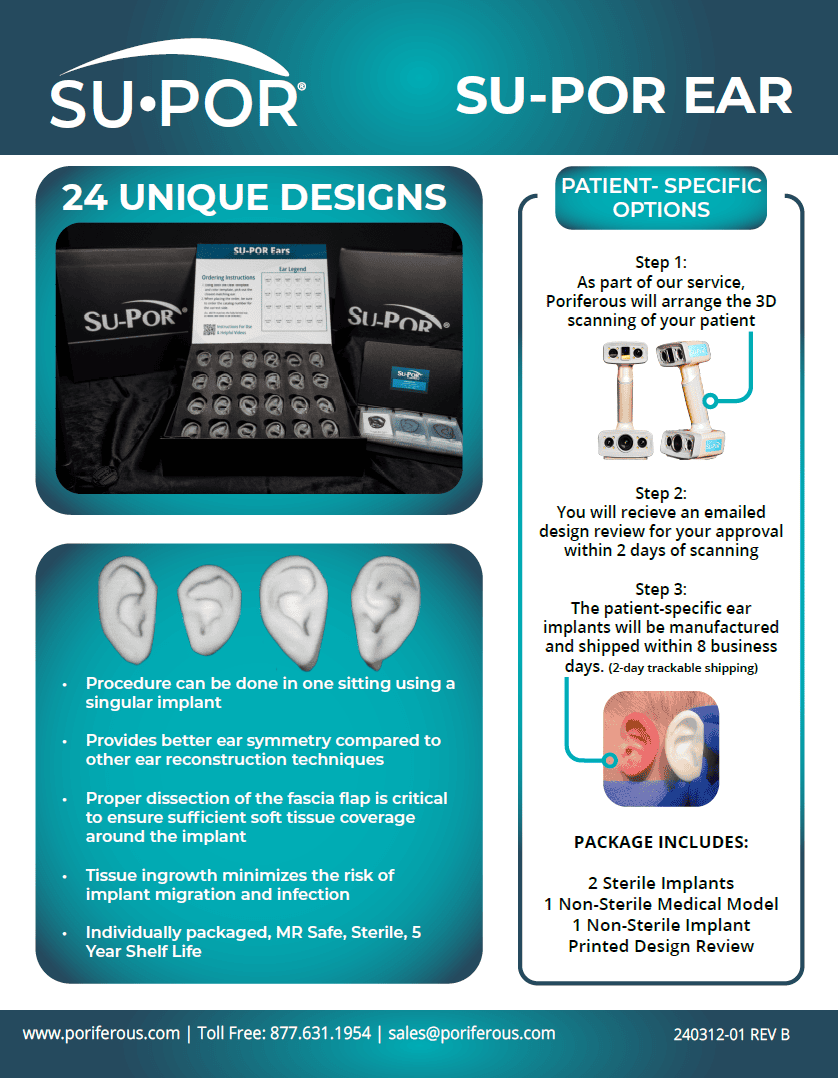
Learn about our One-Piece and Patient-Specific Ear Options!
Pediatric and Adult Auricular Reconstruction
Microtia reconstruction may be performed in both pediatric and adult patients depending on reconstructive requirements and surgical planning considerations. Auricular reconstruction procedures may involve staged reconstruction approaches, individualized contour planning, and framework adaptation based on patient anatomy.
Pediatric auricular reconstruction procedures frequently require consideration of anatomical development, tissue characteristics, reconstructive timing, and long term contour restoration
Adult auricular reconstruction procedures may involve:
– congenital microtia reconstruction
– traumatic auricular defects
– revision reconstruction procedures
– postoperative contour restoration
Porous polyethylene Microtia implants continue to be used in both pediatric and adult auricular reconstruction procedures requiring individualized reconstructive support.
Surgeon Shaping and Custom Framework Support
Microtia reconstruction frequently involves surgeon shaped frameworks and individualized contour adaptation during auricular reconstruction procedures. Porous polyethylene materials may be trimmed and shaped intraoperatively to support reconstructive precision and anatomical contour restoration.
Reconstruction planning may include:
– contour evaluation
– framework shaping
– anatomical symmetry planning
– tissue coverage considerations
– reconstructive workflow coordination
The contour adaptability of porous polyethylene materials allows surgeons to support individualized auricular reconstruction approaches while maintaining structural support characteristics.
To see more surgeon-focused resources, review the SU-POR Clinical Evidence and Surgeon Resources page.
Clinical Experience and Surgeon Testimonials
Clinical experience with porous polyethylene implants in auricular reconstruction spans a wide range of reconstructive applications involving microtia reconstruction and craniofacial surgery. Clinical literature and surgeon experience continue to contribute to reconstructive planning approaches involving porous polyethylene ear frameworks.
Review SU-POR surgeon testimonials and reconstructive experiences for additional information regarding clinical experience and reconstructive applications.