
Porous Polyethylene Orbital Implants
SU-POR® Porous Polyethylene Orbital Implants are designed for use in reconstructive and ophthalmic surgical procedures involving enucleation, evisceration, orbital trauma, and orbital volume restoration.
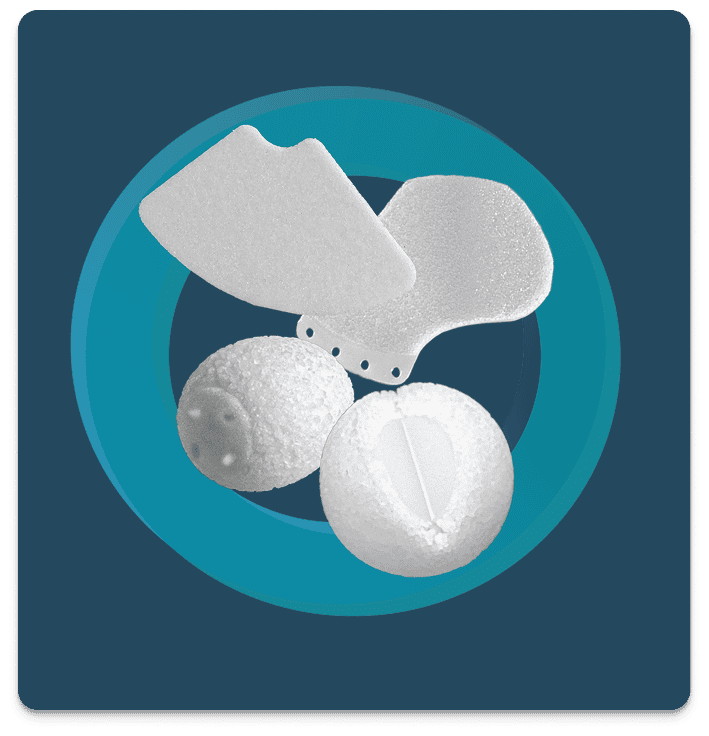
Orbital Reconstruction
Porous polyethylene orbital implants are used in orbital reconstruction procedures requiring structural support, tissue integration, and intraoperative contouring flexibility. The porous structure supports fibrovascular ingrowth following implantation, reducing the risk of infection, rejection, and late term complications. Additionally, the pore structure of SU-POR implants allows them to be easily cut and sculpted with a scalpel, enabling them to be contoured in the sterile field.
Surgical Applications
SU-POR® orbital implants may be used in a variety of reconstructive and ophthalmic surgical procedures.
Enucleation
Enucleation procedures involve removal of the globe while preserving surrounding orbital structures. Orbital implants may be used to help restore orbital volume and support prosthetic rehabilitation following surgery.
Evisceration
Evisceration procedures involve removal of intraocular contents while maintaining portions of the scleral shell. Orbital implants may be used to support orbital contour and prosthetic fitting requirements.
Orbital Trauma Reconstruction
Orbital trauma may result in:
– orbital floor fractures
– wall defects
– contour deformities
– volume deficiencies
Porous polyethylene orbital implants may be adapted during surgery to support reconstruction of traumatic orbital defects.
Implant Options
SU-POR porous polyethylene implants are available in a variety of shapes designed to application in a variety of orbital reconstruction procedeures. Shapes include:
– Spheres
– Orbital Floors
– Rims
– and More
Many implants may be trimmed and shaped intraoperatively to better suit surgical requirements and anatomical considerations.
For additional reconstructive product options, visit the SU-POR Product Catalogue
Surgeon and Ocularist Collaboration
Orbital reconstruction and prosthetic rehabilitation frequently involve collaboration between surgeons and ocularists. Surgical planning may include consideration of:
– implant selection
– orbital volume restoration
– prosthetic positioning
– anatomical contour support
– postoperative prosthetic rehabilitation
Communication between surgical and prosthetic teams may help support individualized patient outcomes during orbital reconstruction and rehabilitation procedures.
Porous polyethylene implants are commonly incorporated into multidisciplinary reconstructive workflows involving ophthalmic surgeons, craniofacial surgeons, and ocularists.
Additional Orbital Reconstruction Considerations
Orbital reconstruction procedures may vary significantly depending on:
- patient anatomy
- reconstructive goals
- extent of trauma
- congenital abnormalities
- prior surgical history
Material selection is often influenced by:
- contouring requirements
- reconstructive complexity
- tissue integration considerations
- surgeon preference
- long term reconstructive support
Porous polyethylene implants continue to be widely used in orbital and craniofacial reconstruction because of their combination of structural support and contour adaptability.
Read More