
Porous Polyethylene Facial Implants | SU-POR®
SU-POR Porous Polyethylene facial implants are used in craniofacial reconstruction and facial augmentation procedures requiring contour restoration, structural support, and tissue integration.
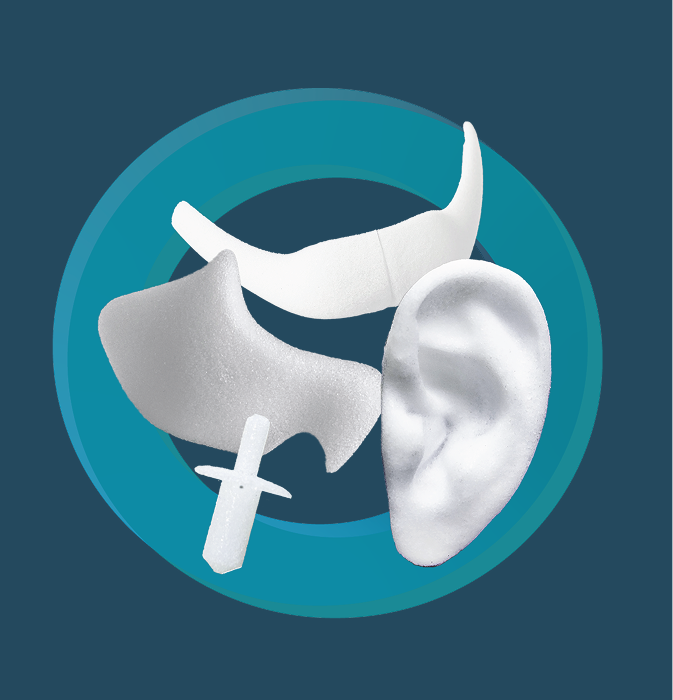
Facial Reconstruction
SU-POR porous polyethylene facial implants are designed to support reconstructive and aesthetic procedures involving craniofacial contour deficiencies, traumatic defects, congenital abnormalities, and surgeon-directed facial reconstruction planning.
The porous polyethylene structure supports fibrovascular tissue ingrowth following implantation while maintaining contour adaptability and reconstructive flexibility. Porous polyethylene materials have been widely used in craniofacial reconstruction because of their biocompatibility and intraoperative modification capabilities.
Implant Options
Facial reconstruction procedures may involve restoration of contour, anatomical symmetry, and structural support following trauma, congenital abnormalities, tumor resection, or revision surgery. Porous polyethylene facial implants are commonly used in reconstructive procedures requiring individualized contour adaptation and reconstructive flexibility, such as:
– malar augmentation
– chin augmentation
– craniofacial contour restoration
– facial asymmetry correction
– traumatic facial defect reconstruction
Porous polyethylene implants may be shaped and adapted intraoperatively to support individualized reconstructive approaches and anatomical contour restoration.
For additional reconstructive product options, visit the SU-POR Product Catalogue
Why Surgeons Use SU-POR Facial Implants
Porous polyethylene materials are commonly used in facial reconstruction because of their contour adaptability and fibrovascular ingrowth support. They are very biocompatible and lightweight, making them flexible options for reconstruction.
The interconnected porous structure supports tissue integration following implantation while allowing surgeons to trim and contour implants during reconstruction procedures.
Porous polyethylene facial implants may assist surgeons in restoring facial contour and anatomical symmetry while accommodating individualized reconstructive goals and craniofacial anatomy.
Clinical Applications
Facial Augmentation
Facial augmentation procedures may involve restoration of contour and projection in areas requiring structural enhancement or reconstructive support.
Reconstruction
Craniofacial reconstruction procedures may require restoration of facial symmetry, anatomical contour, structural continuity, and postoperative defect coverage following trauma, congenital abnormalities, or surgical intervention, even after traumatic injuries. Porous polyethylene implants may be adapted intraoperatively to support individualized reconstructive planning and contour restoration.
Revision Reconstruction
Revision procedures may involve individualized reconstructive planning depending on prior surgical history, contour irregularities, and reconstructive complexity.
Surgeon Modification and Contour Support
Facial reconstruction procedures frequently require intraoperative contour modification and individualized implant shaping. Porous polyethylene materials may be trimmed and contoured during surgery to support reconstructive precision and patient-specific anatomical adaptation.
Reconstruction planning may include:
– contour evaluation
– implant shaping
– facial symmetry assessment
The contour adaptability of porous polyethylene implants allows surgeons to support individualized facial reconstruction approaches while maintaining structural support characteristics.