
Patient-Specific Cranial Implants
SU-POR® Porous Polyethylene Cranial Implants are designed for use in cranioplasty, craniofacial reconstruction, contour restoration, and defect reconstruction procedures involving traumatic, congenital, or postoperative cranial defects.
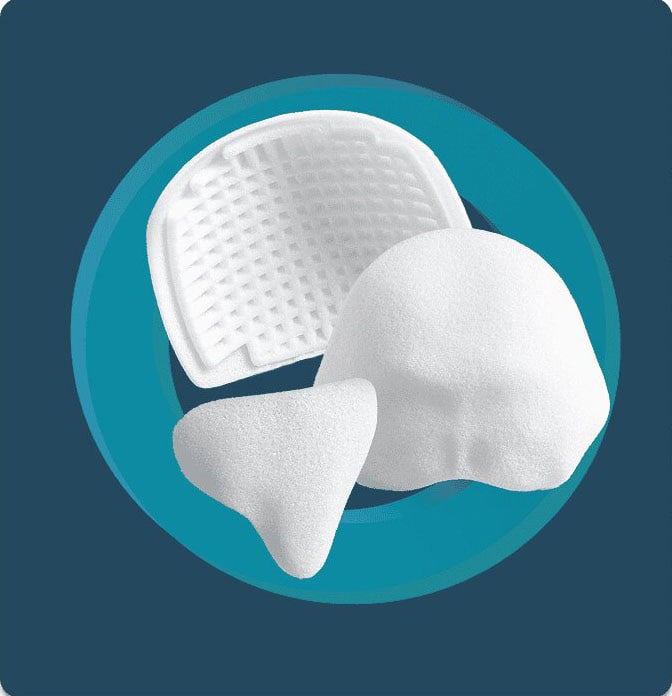
Patient-Specific Cranial Reconstruction
Patient Specific Cranial Reconstruction
Patient-specific cranial reconstruction procedures may be performed following:
– traumatic cranial injury
– decompressive craniectomy
– tumor resection
– congenital cranial abnormalities
– revision cranioplasty
– complex craniofacial reconstruction
These procedures often require restoration of:
– cranial contour
– anatomical symmetry
– structural integrity
– individualized defect coverage
Patient-specific implants are designed around imaging and reconstructive planning requirements to support anatomical restoration during cranial reconstruction procedures.
For additional cranial reconstruction solutions, view our porous polyethylene cranial implants
Surgical Applications
SU-POR® Patient-Specific Cranial Implants may be used in a variety of cranial and craniofacial reconstruction procedures.
Cranioplasty Reconstruction
Cranioplasty procedures may require individualized reconstruction depending on defect anatomy and reconstructive goals. Patient-specific implants may be designed to support contour restoration and structural reconstruction in complex cranial defects.
Post-Traumatic Cranial Reconstruction
Traumatic cranial injuries may result in:
– irregular cranial defects
– contour asymmetry
– structural deficiencies
– postoperative reconstruction requirements
Patient-specific implants may assist in reconstruction planning involving individualized cranial anatomy and defect characteristics.
Revision Reconstruction
Revision cranial reconstruction procedures may present additional reconstructive complexity because of:
– prior surgeries
– altered anatomy
– contour irregularities
– scar tissue considerations
Patient-specific implant approaches may be considered in revision reconstruction procedures requiring individualized anatomical adaptation.
Congenital Craniofacial Reconstruction
Congenital craniofacial abnormalities may involve complex anatomical reconstruction requiring individualized surgical planning and contour restoration.
Patient-specific implants may support reconstructive approaches tailored to craniofacial anatomy and defect requirements.
For additional reconstructive product options, visit the SU-POR Product Catalogue
Why Patient-Specific Implants
Patient-specific cranial implants are developed to address the unique anatomical characteristics associated with individual cranial defects. Reconstruction complexity may vary significantly depending on defect size, contour irregularities, prior surgical history, traumatic injury patterns, and overall craniofacial anatomy. Because of this variability, individualized reconstruction planning is often an important component of complex cranial reconstruction procedures.
Patient-specific implant design may assist surgeons with contour restoration, anatomical symmetry, and reconstructive precision during defect-specific reconstruction. These implants are designed around individualized anatomical requirements to support restoration of cranial structure and contour while accommodating the complexity of each reconstructive case.
The porous polyethylene structure supports fibrovascular tissue ingrowth following implantation while maintaining contour adaptability and structural support characteristics. Porous polyethylene materials are commonly used in craniofacial reconstruction.
– Biocompatible
– Reconstructive flexibility
– Structural support
– Ability to support individualized anatomical restoration
These characteristics make porous polyethylene a widely used material in complex cranial and craniofacial reconstruction procedures requiring patient-specific reconstruction approaches.
Implant Design and Reconstruction Planning
Patient-specific cranial reconstruction frequently involves collaboration between craniofacial surgeons, neurosurgeons, reconstructive surgical teams, and biomedical design specialists. Reconstruction planning may include imaging evaluation, anatomical assessment, defect analysis, contour restoration planning, and implant design review depending on the complexity of the reconstructive procedure.
Individualized planning may help support reconstructive precision in complex cranial reconstruction procedures while assisting surgeons in restoring cranial contour and anatomical symmetry. Reconstruction planning often begins with CT imaging evaluation and anatomical assessment to support defect analysis, contour restoration planning, and patient-specific implant development. The CT workflow may assist surgical teams in evaluating cranial anatomy, reconstructive complexity, and defect dimensions during preoperative planning. Patient-specific implant design is developed around individualized anatomical requirements to support reconstructive precision and cranial contour restoration in complex cranioplasty and craniofacial reconstruction procedures.
Benefits of Porous Polyethylene in Patient-Specific Reconstruction
Porous polyethylene materials are commonly used in craniofacial reconstruction because of their contour adaptability, reconstructive flexibility, and biocompatibility. The interconnected pore structure supports fibrovascular tissue ingrowth following implantation while maintaining lightweight structural support characteristics.
Key material characteristics include:
– fibrovascular ingrowth support
– contour adaptability
– lightweight structural support
Implants may be adapted to support individualized cranial contour restoration and reconstructive goals in complex craniofacial reconstruction procedures.
Additionally, the surgeon is closely involved in the approval process for the implant. Implant designs may undergo review and approval by the surgical team prior to manufacturing to help support individualized reconstructive goals, anatomical symmetry, and procedural planning requirements. Efficient collaboration can result in accelerated turnaround times that may help support surgical scheduling and reconstruction planning in cases requiring coordination between imaging evaluation, implant design review, manufacturing, and surgical reconstruction.
SU-POR Patient Specific implants ship in as few as 8 business days after design approval and purchase order.
Additional Reconstruction Considerations
Patient-specific cranial reconstruction procedures may vary significantly depending on patient anatomy, reconstructive objectives, traumatic injury severity, prior surgical history, and overall craniofacial complexity. Material selection and implant planning are often influenced by reconstructive precision requirements, contour restoration goals, structural support considerations, surgeon preference, and long term reconstruction planning.
Patient-specific porous polyethylene implants continue to be used in complex craniofacial reconstruction procedures requiring individualized anatomical restoration.
Read More