
Porous Polyethylene Cranial Implants | SU-POR®
SU-POR® Porous Polyethylene Cranial Implants are designed for use in cranioplasty, craniofacial reconstruction, contour restoration, and defect reconstruction procedures involving traumatic, congenital, or postoperative cranial defects.
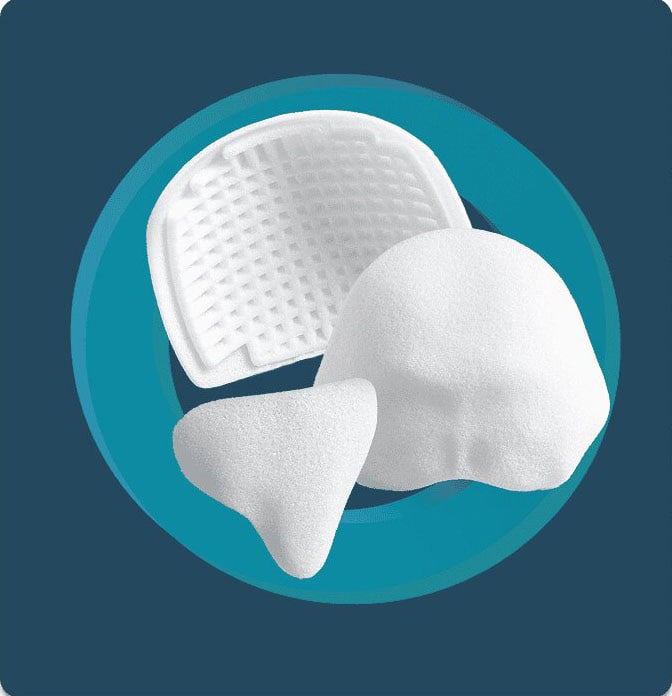
Cranial Reconstruction
Surgical Applications
Cranioplasty
Cranioplasty procedures involve restoration of cranial defects resulting from trauma, surgery, or congenital abnormalities. Cranial implants may be used to help restore contour, provide structural support, and improve cranial symmetry following reconstruction.
Cranial Defect Reconstruction
Cranial defects may result from:
– traumatic injury
– surgical intervention
– congenital deformities
– tumor resection
Porous polyethylene implants may be adapted during surgery to support reconstruction of cranial defects and contour deficiencies.
Craniofacial Reconstruction
Craniofacial reconstruction procedures may involve restoration of:
– anatomical contour
– cranial symmetry
– structural continuity
– postoperative defect coverage
Revision Cranial Reconstruction
Revision procedures may require individualized reconstruction planning depending on prior surgical history, defect characteristics, and anatomical considerations.
SU-POR offers Patient-specific Implant options for consideration in complex cranial reconstruction cases.
Implant Options
SU-POR porous polyethylene cranial implants are available in many shapes, designed to support a wide variety of cranial reconstruction procedures such as:
– Burr Hole Covers
– Sellar Floors
– Osteotomy Gap Fillers
-Temporal Flex Grids
-and more
Implants may be trimmed and shaped intraoperatively depending on surgical requirements and anatomical considerations.
For additional reconstructive product options, visit the SU-POR Product Catalogue
Additional Orbital Reconstruction Considerations
Cranial reconstruction procedures may vary significantly depending on:
– patient anatomy
– reconstructive goals
– extent of trauma
– congenital abnormalities
– prior surgical history
Material selection is often influenced by:
– contouring requirements
– reconstructive complexity
– tissue integration considerations
– surgeon preference
– long term reconstructive support
Porous polyethylene implants continue to be widely used in cranial and craniofacial reconstruction because of their combination of structural support and contour adaptability.
Read More